This booklet explains the four major groups of cropland in Mills County based upon it's capability of production. Other lands are described that are not suitable for tillage, but can be developed as grass-land, woodland or wildlife areas. Farmers…
This booklet discusses the management of
water on the farm as the prime factor in
reduction of flood devastation. Control measures discussed include grassed waterways, diversion ditches, strip farming, terracing. farm ponds, and…
This bulletin is a compilation of the best information available at the time on terrace construction and its coordination with other recommended soil conservation practices. It includes the history of terracing as well as how to implement a terracing…
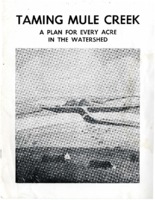
This booklet is a history and explanation of the Mule Creek watershed program in Mills County, Iowa that was developed in 1949 for the purpose of controlling erosion and flooding on farmland using a watershed protection program.
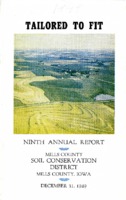
Highlights of this annual report include the formation of the Mule Creek Watershed Association at a meeting on October 6, 1949 which was organized to formulate a plan to control floods in the river valleys. An aerial photography program resulted in …
The purpose of this outline is to help Mills County, Iowa students in the fourth through eighth grades have a better understanding of the problems of conservation in general, and in particular, the resources of Mills County.
Image - Hermes kneeling with grapes in one hand, the other holding a caduceus over his shoulder; above "MISS E. ZEITLIN" and below "EX-LIBRIS"; engraved at his knee Ismael Smith